Power Usage and Temperatures
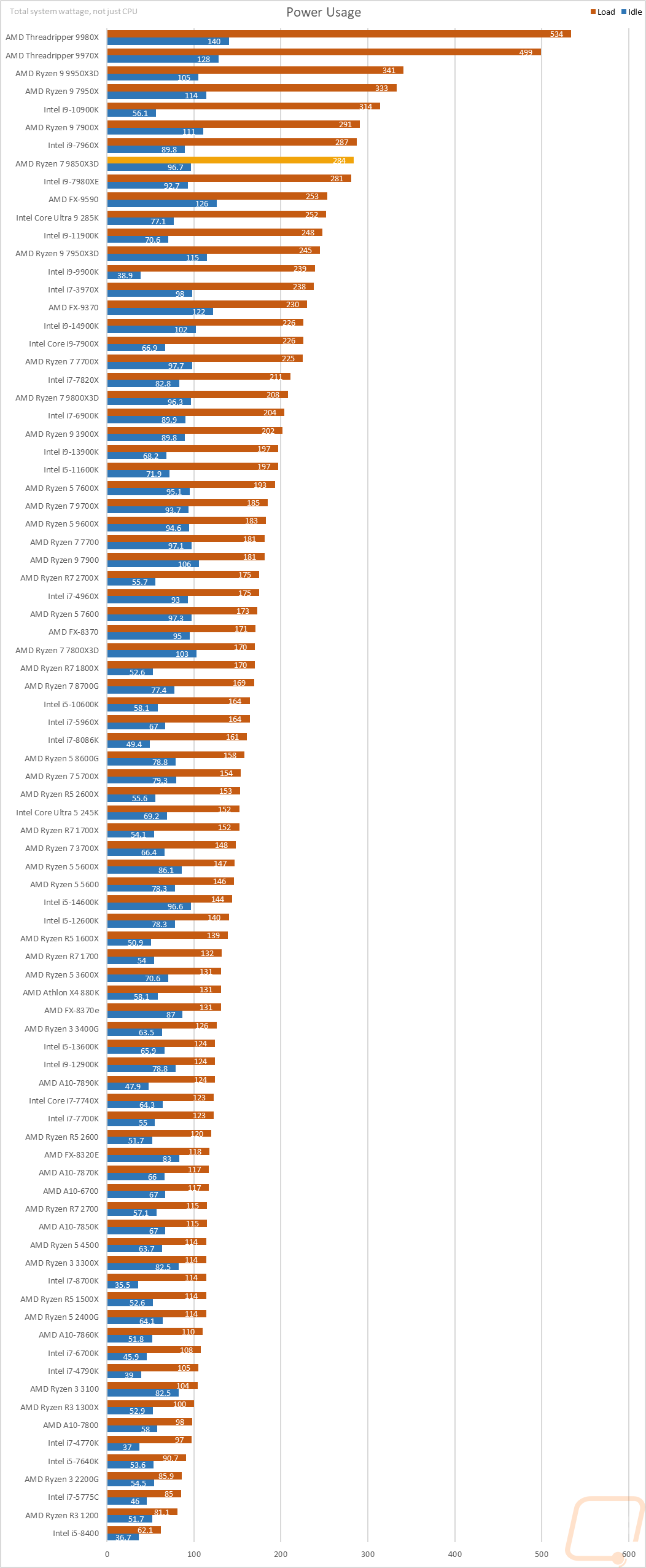
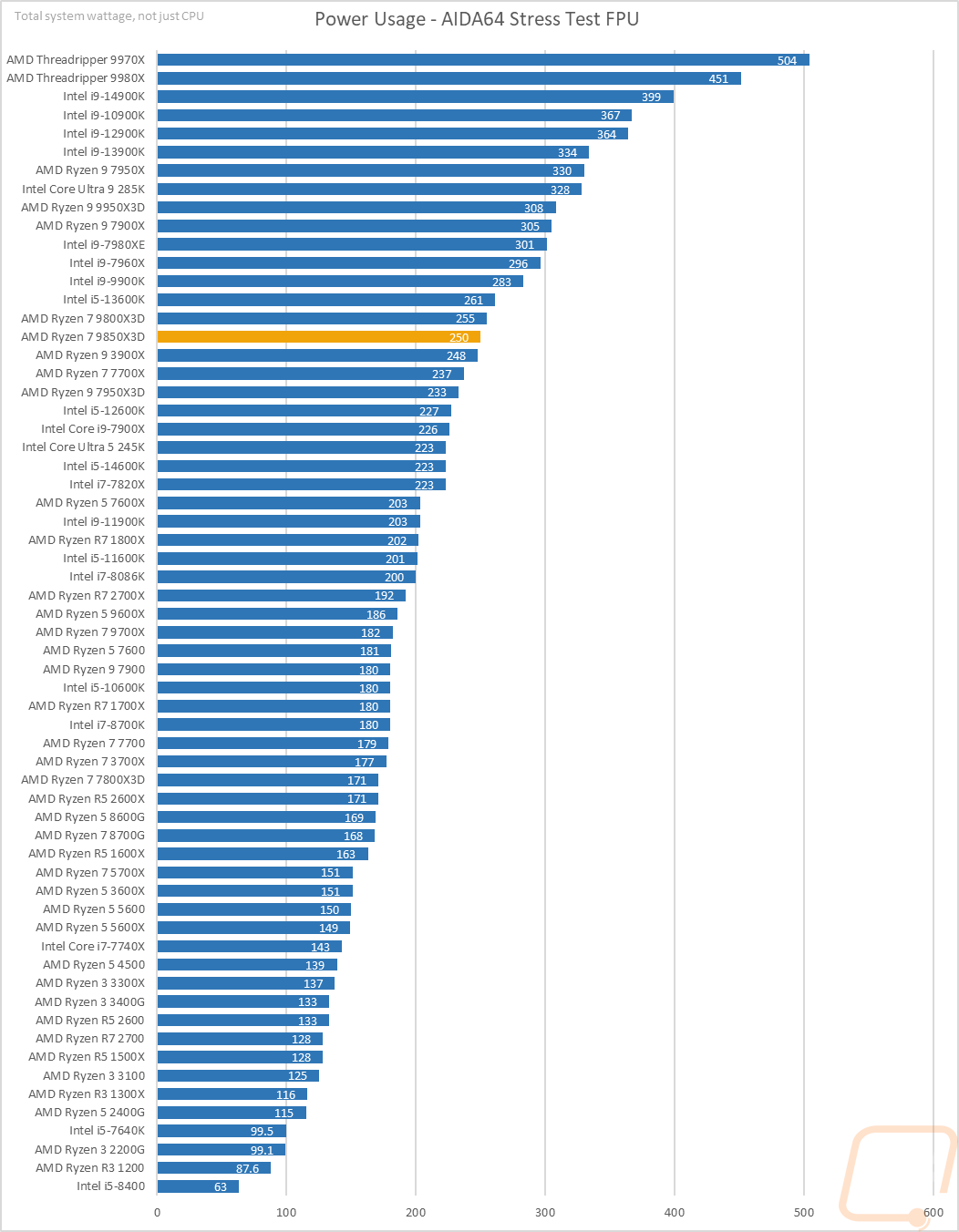
For some people, performance is the only thing important, but for others, power usage and temperatures also play a role, so we do take a look at both of those as well. This is especially important in SFF, or even just smaller mid-sized builds and it affects the components you need to get for your system as well as your PSU and cooler. To take a look at power usage, I ran three different tests. I noted the idle power draw of our entire system, then I took a look at the load wattage of the system using two different workloads. One was wPrime and the second was AIDA64 using their FPU workload, which is extremely demanding. At idle, the testbench with the Ryzen 7 9850X3D pulled 96.7 watts, which is almost the same as we saw with the 9800X3D. That is still higher than with the Intel CPUs, the 285K pulled 77.1 watts for example but it is better than some of the previous generations of Ryzen X3D CPUs. With wPrime as the workload, the Ryzen 7 9850X3D and testbench pulled 284 watts at peak, which does put it up near the top of our charts with CPUs like the 9950X3D and Threadripper CPUs sitting ahead of it. The 285K was at 253 watts and the 9800X3D was at 208 watts for comparison. On the other hand, with the AIDA64 FPU workload the Ryzen 7 9850X3D is just behind the 9800X3D and the 285K was pulling a lot more at 328 watts. So it does depend on the workload.
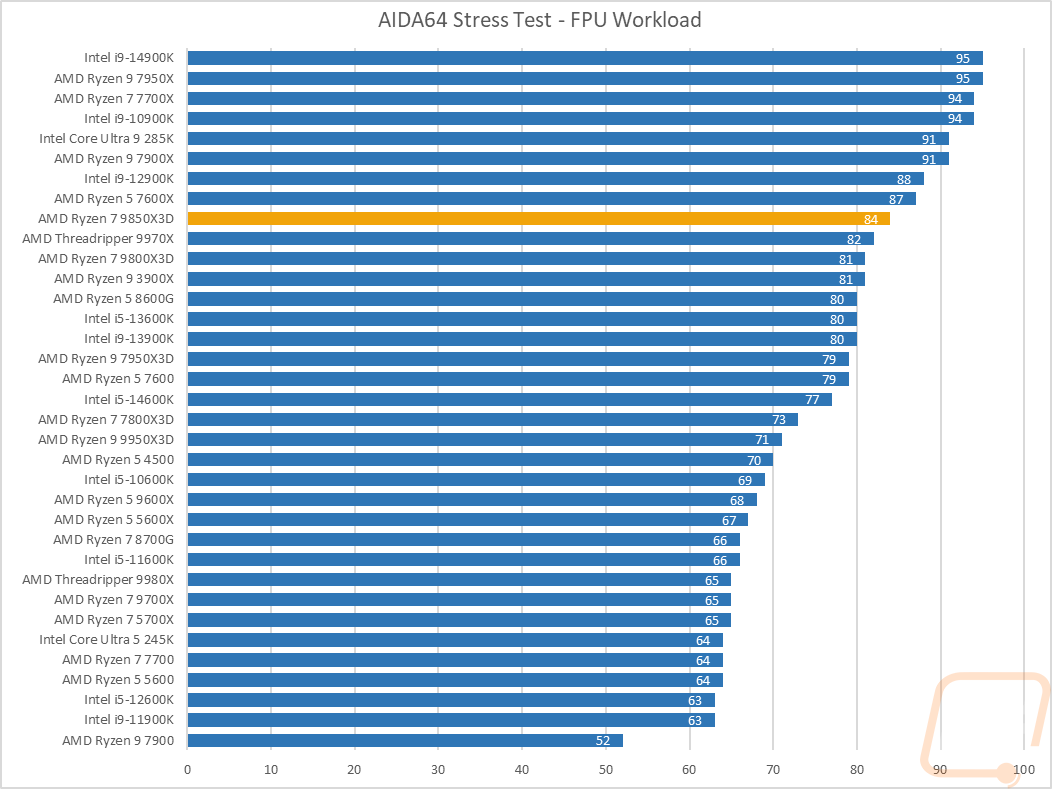
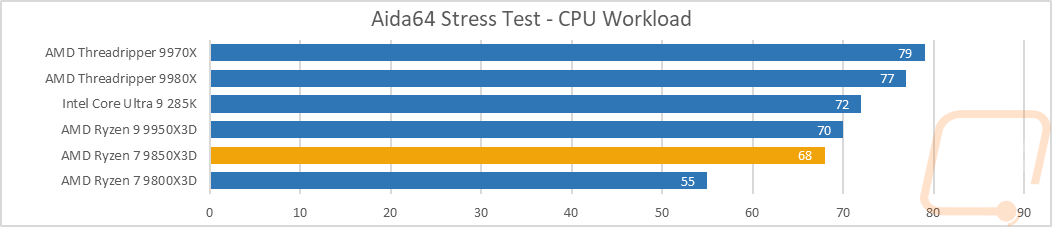
I’ve spoken in the past about how temperature testing isn’t an end-all, be-all result. CPU to CPU with the same CPU can be different and that gets even more complicated once you add in different motherboards and BIOS revisions as well. Not to mention different coolers. In this case, the Ryzen 7 9850X3D ran at 84 degrees when running the AIDA64 FPU workload for a half hour, which was 3 degrees higher than the 9800X3D using the same cooler. Then, when using the more realistic (for normal use) CPU workload was cooler but again noticeably higher than the 9800X3D with the Ryzen 7 9850X3D sitting at 68 degrees and the 9800X3D at 55 °C. That was 4 degrees less than the 285K, but it's clear that the extra max boost clock speed does affect temperatures.