Onboard Video Performance
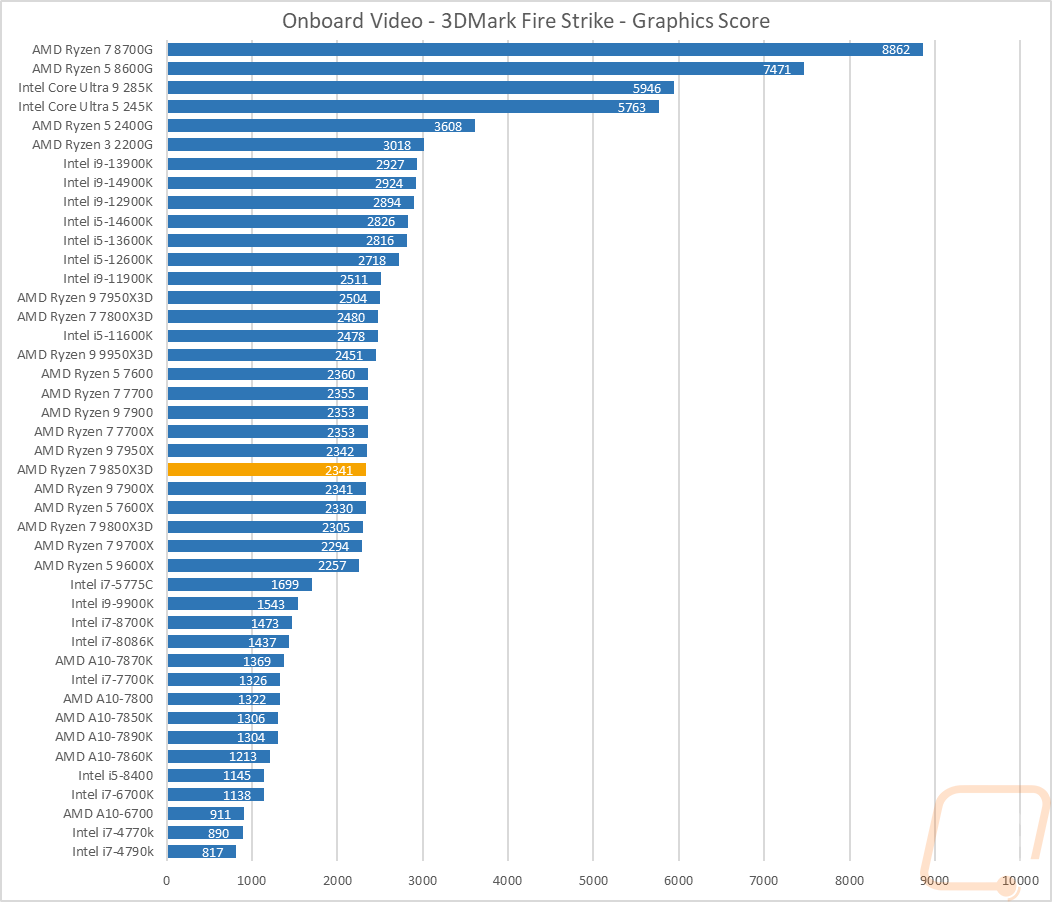
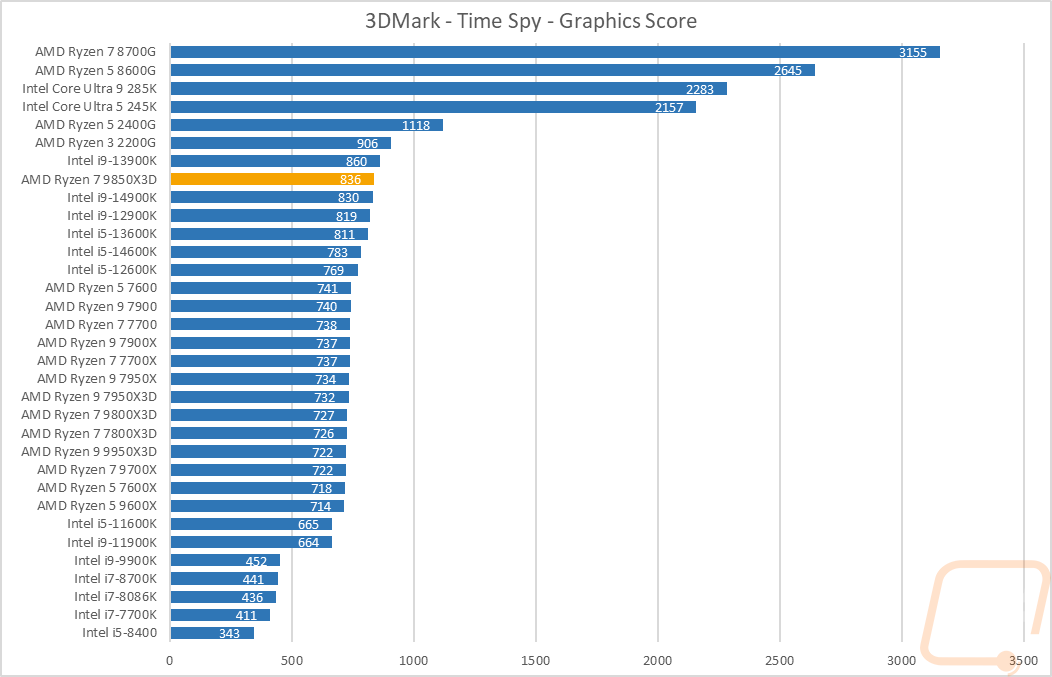
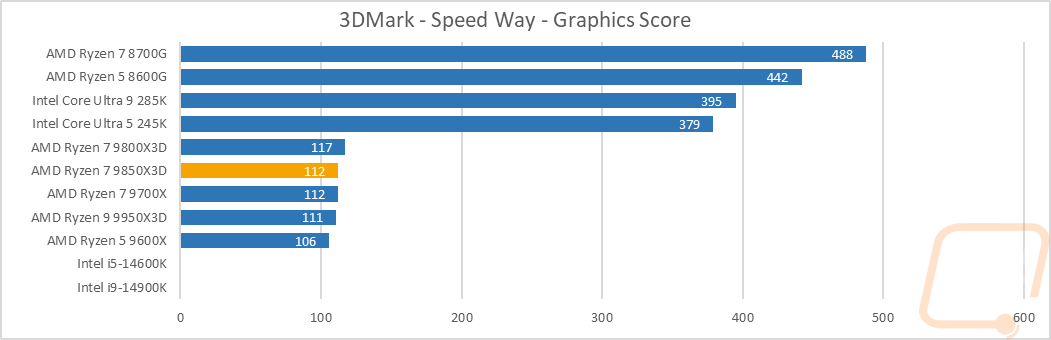
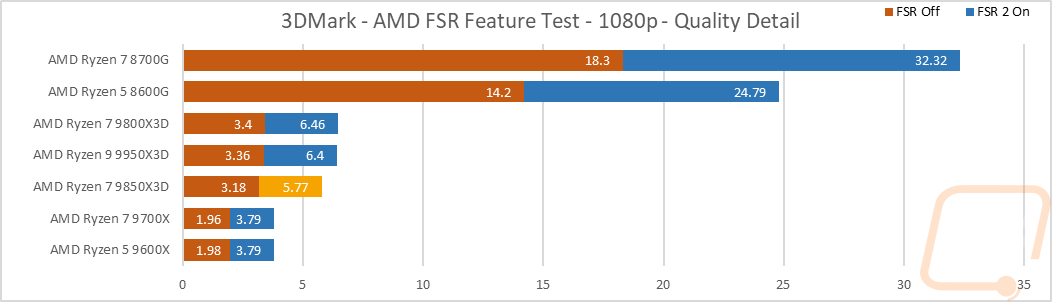
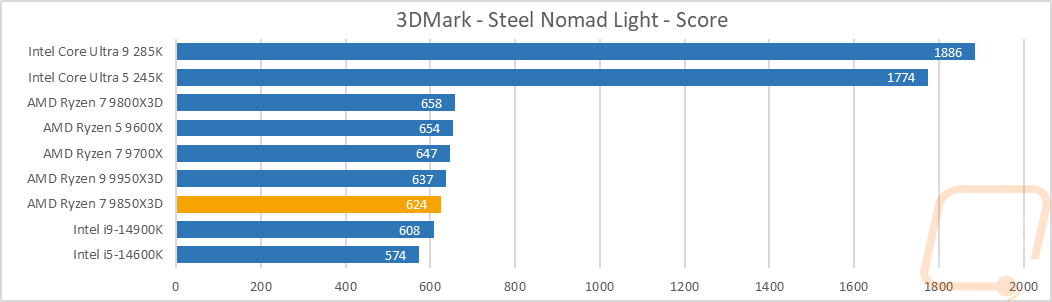
With the Ryzen 7 9850X3D or any X3D CPU really, I doubt that anyone would be looking to run it without a dedicated GPU unless you had a specific use case where the 3D V-Cache is needed for your workload. But I always test CPUs with their own integrated graphics in our onboard video test suite to see how they perform. Our expectations are significantly lower here than you would have with any dedicated GPU, but it is nice when you are waiting for your new or replacement video card to come in to still be able to play SOME games. To start testing off, I went with old reliable, 3DMark. The Ryzen 7 9850X3D sits right in the middle of a large clump of CPUs on the Fire Strike chart, with all of the Ryzen non-G CPUs performing similarly. Intel’s older generations are still ahead here and the 245K and 285K are significantly higher than that even. With Time Spy, the AMD G Series CPUs are still at the top along with Intel's latest CPUs, but the Ryzen 7 9850X3D did jump out of the normal pack and into the mix with the older 14900K and 13900K. With Speed Way, the Ryzen 7 9850X3D is back in the mix with the other Ryzen CPUs and was a few points below the 9800X3D. I did also run the AMD FSR Feature test at 1080p using the quality setting and those results are below as well. The frame rates are scary with the Ryzen 7 9850X3D seeing 3.18 without FSR and 5.77 with it, but the importance here is that we can see just how much FSR could help edge out a little more performance and in this case, get close to doubling it, which would be huge when gaming with your integrated graphics. I also slipped in the Steel Nomad Light test, which is more in line with testing integrated graphics, and the Ryzen 7 9850X3D is sitting once again in the middle of the other Ryzen CPUs.
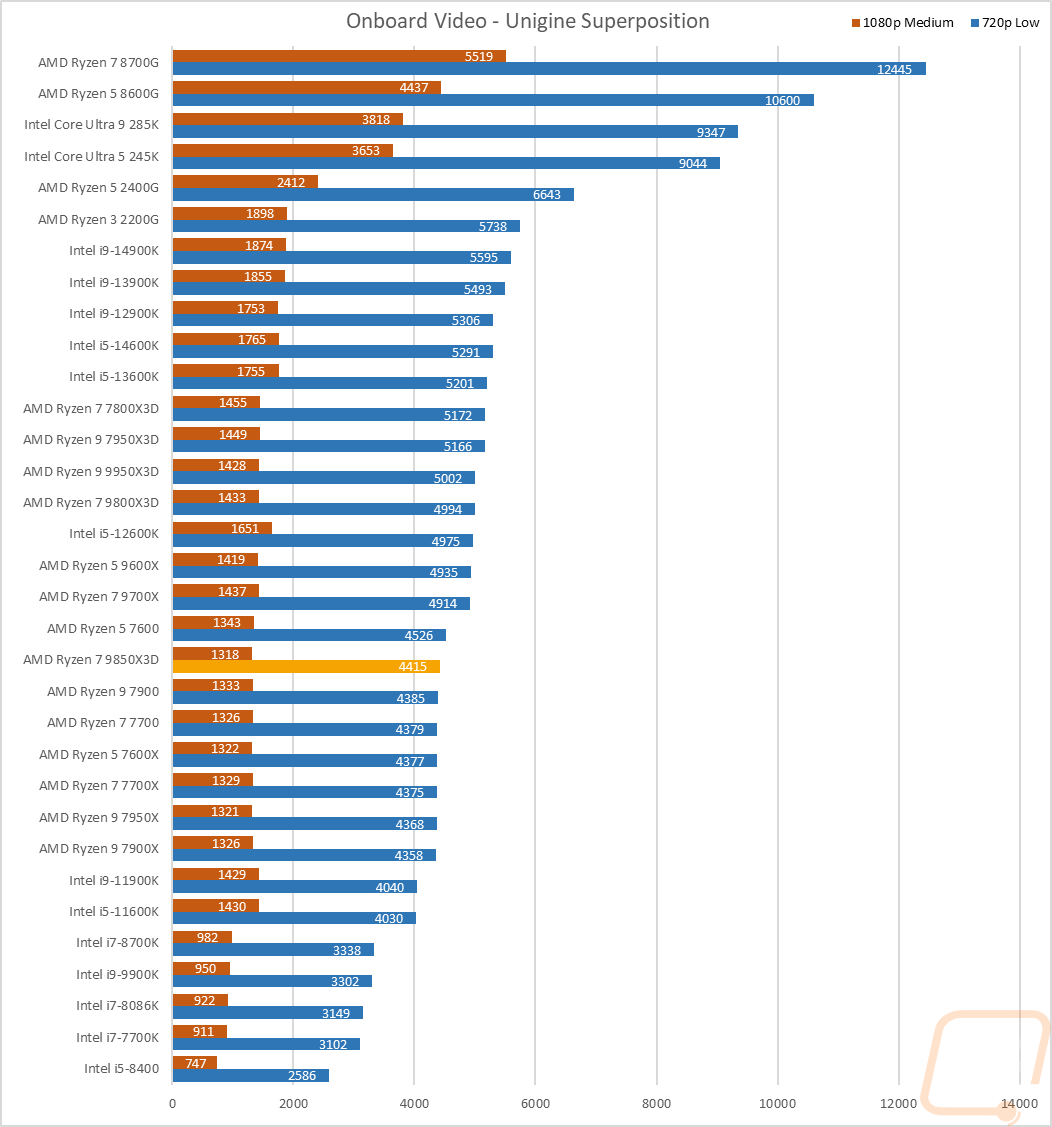
For Unigine Superposition, I ran both the 720 Low and 1080 Medium presets. The Ryzen 7 9850X3D scored a 4415 on the 720 Low test and 1318 for the 1080p0 medium test. It was again right in the middle of the pack for the Ryzen CPUs, but it did come in a little lower than the 9800X3D for comparison.
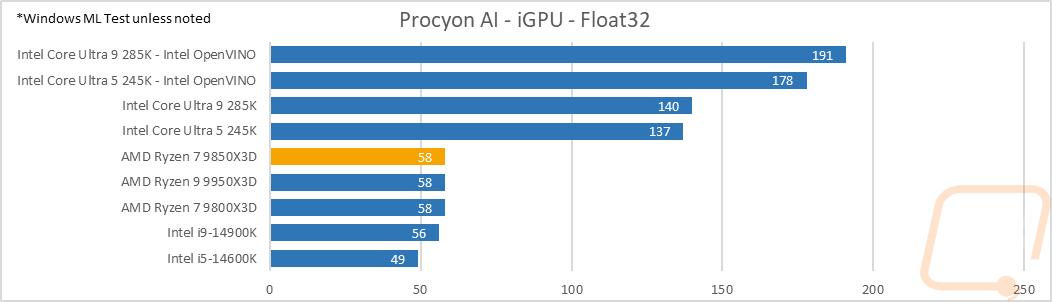
With AI being an important metric these days, I did slip in a look at the AI performance for the integrated GPU as well, using Procyon’s AI Computer Vision Benchmark which tests using a few different neural network models including Yolo v3 which is one of the models we use with our own AI security camera filtering. The Ryzen 7 9850X3D is in a three-way tie with the 9950X3D and 9800X3D. That put them ahead of the older Intel CPUs but well behind the newer Intel CPUs.
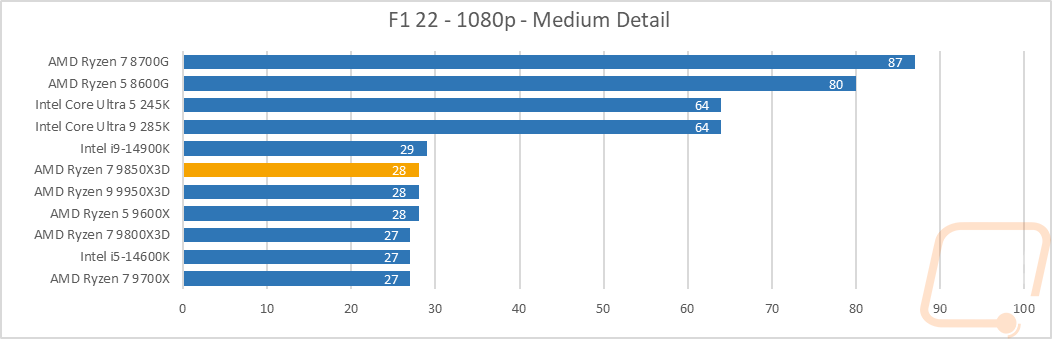
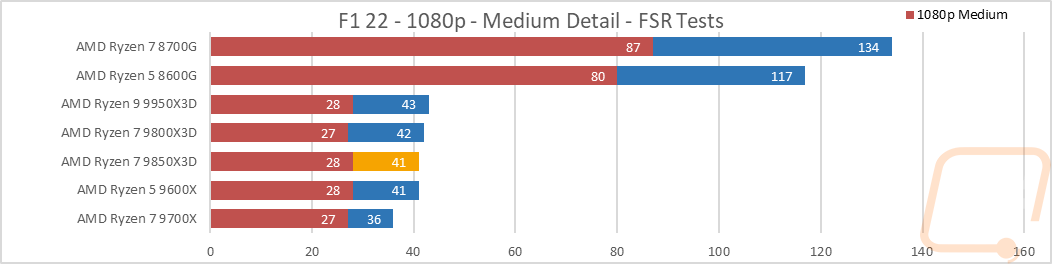
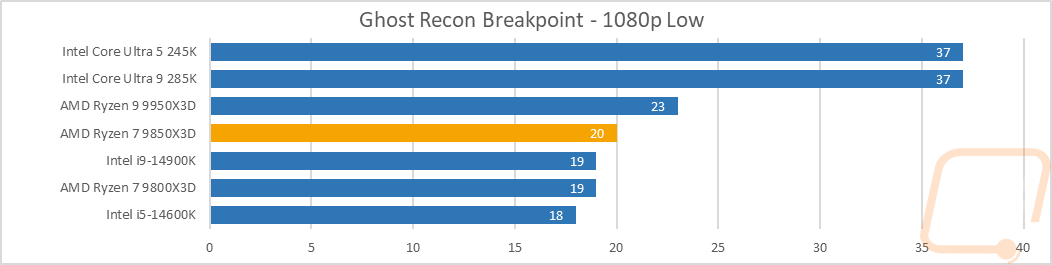
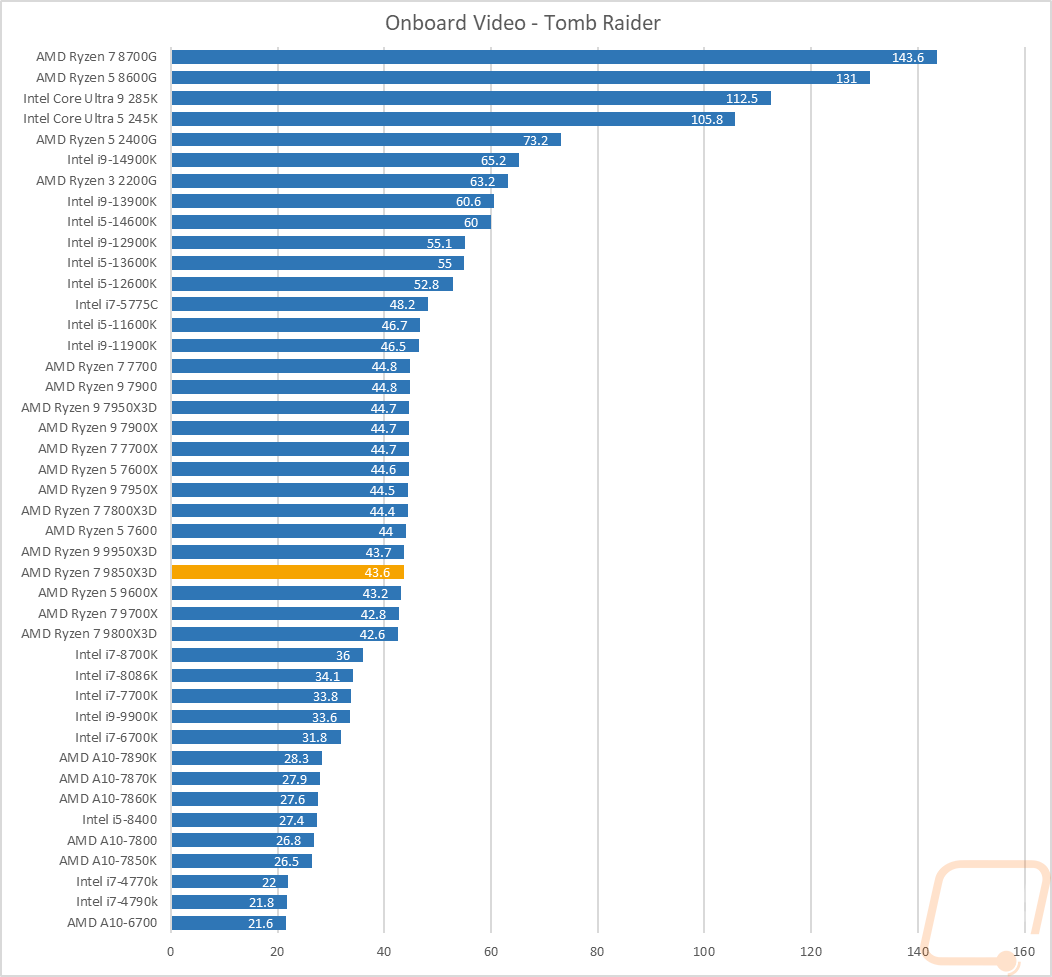
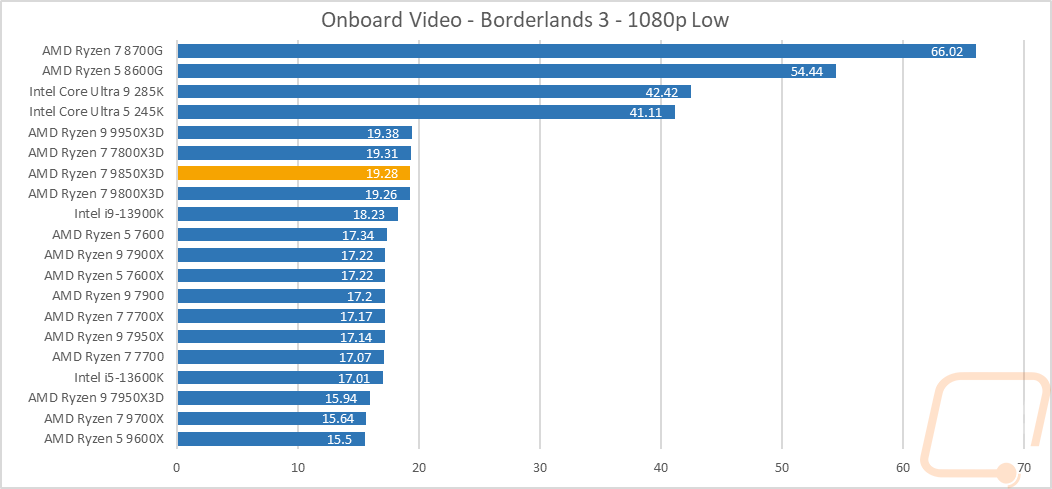
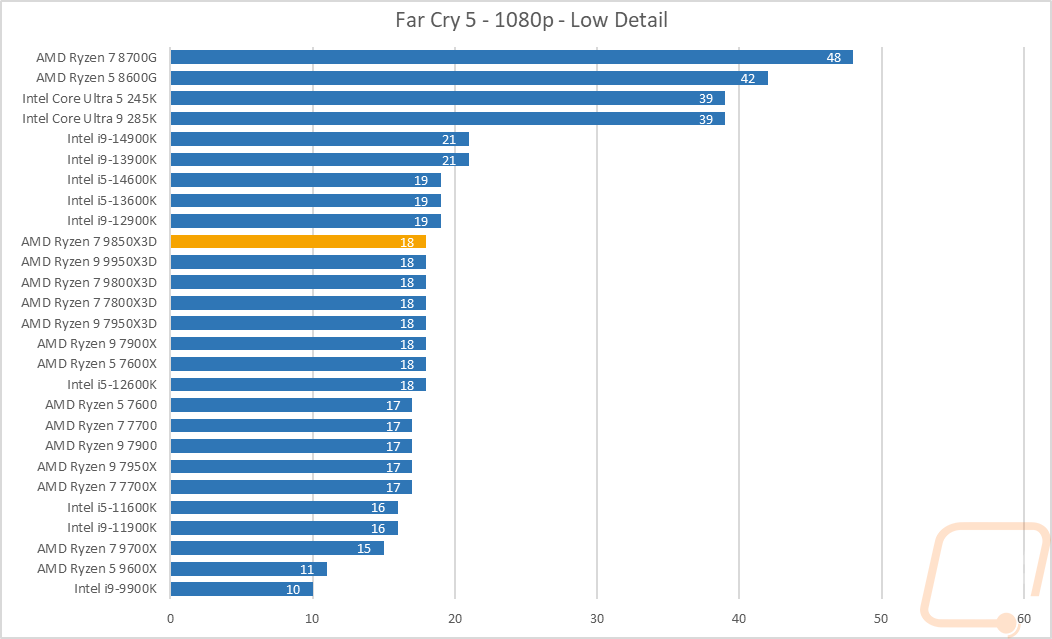
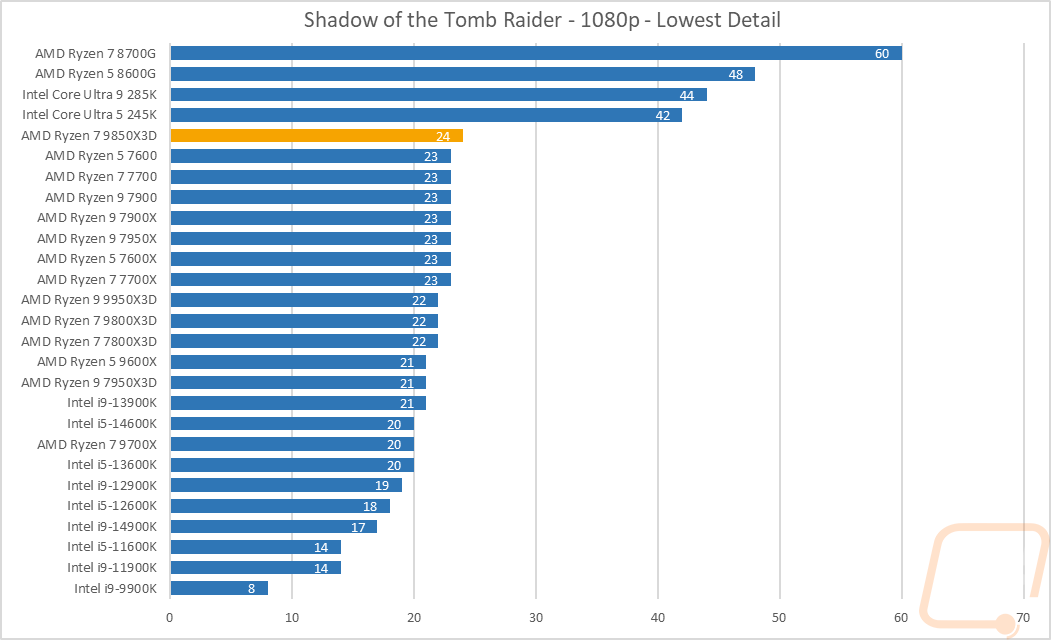
Then from there on, I jumped into game tests. Some of our tests are older games, but I did also add in a few newer games as well to get an idea of newer games when tested at 1080p and low or medium settings. My goal with these tests was to see if base-level gaming at low or medium settings was possible at all. The Ryzen 7 9850X3D isn’t at the top of the charts in these game tests like in our previous game tests, but it does still sit right in the middle of the pack of Ryzen CPUs. What that means in games like F1 22, you can expect playable but not amazing framerates, especially if you utilize FSR to improve performance from 28 FPS up to 41 FPS. Still not over 60, but in a pinch it does work. In the older games like Tomb Raider, you will see over 40 FPS, but in a majority of the games you can expect less than 30 FPS unless you plan on playing at lower than 1080p.